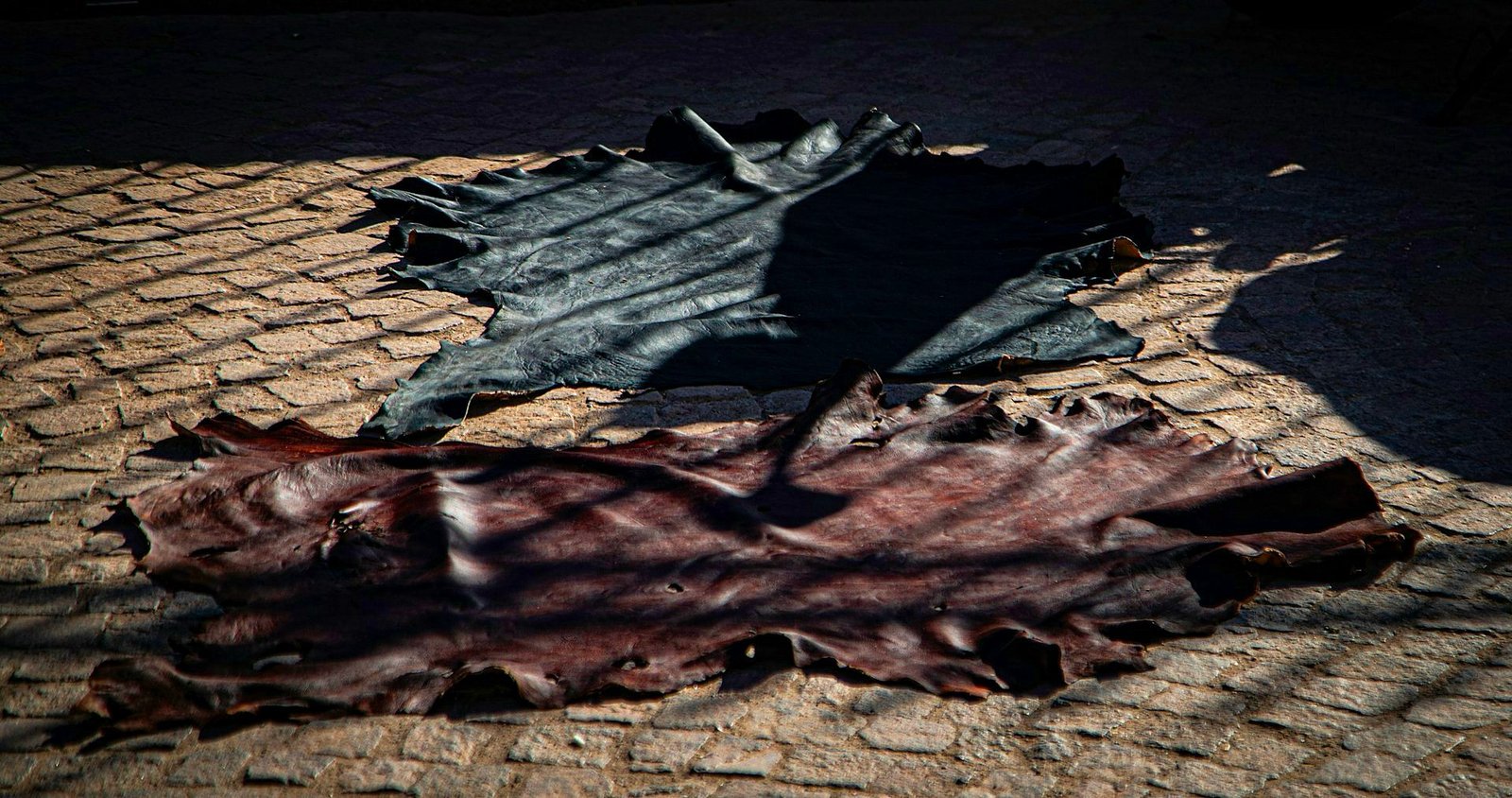
So-Called Natural By-Product & Luxury
Okay, we’ve all been there. You’re trying to enjoy your avocado toast, and someone walks by in a “vintage” leather jacket, smelling like a mix of chemical runoff and sadness. At Caavakushi, we’ve seen that while the world is obsessing over so-called quiet luxury, nobody is talking about the loud, screaming reality of the toxic biohazard that is the leather industry.
The Caavakushi team feels that calling leather a natural byproduct is the ultimate gaslighting of the 21st century. It’s 2026, and the fact that we’re still peeling skins off sentient beings is, frankly, embarrassing. We’ve crunched the numbers, and the data is a total horror show.
The Horrors Of The Leather Industry
Let’s get one thing straight: the leather industry is not a waste-management service for the meat industry. The Caavakushi team noticed that it’s actually a $400 billion global powerhouse that stands on its own four (blood-soaked) feet. We feel that byproduct is just a crude marketing term used to make people feel better about wearing a corpse.
The Body Count Is 100% Unnecessary
We aren’t just talking about a few cows here. According to recent projections from Immaculate Vegan and Viva!, the industry is on track to slaughter over 430 million cows annually by the end of 2025 and into 2026 to keep up with the demand for luxury goods.
As vegans, we think it’s absolutely mental that PETA has stated that roughly one billion animals—including sheep, goats, and pigs—are killed every year primarily for their skins in 2025. The Caavakushi team found that for exotic leathers like ostrich, the skin is actually worth 80% more than the meat, making the animal a co-product at best, and a target at worst.
Tanning Is A 100% A Toxic Biohazard
You might think leather is natural because it’s skin, but we at Caavakushi strongly feel that the chemical process used to stop it from rotting is anything but. Approximately 85% to 90% of global leather is tanned using Chromium III.
Also, in major tanning hubs, 50% of the chromium used often ends up dumped directly into local water systems. This isn’t just an environmental oopsie—it’s a Toxic biohazard and a death sentence for local ecosystems. In places like Bangladesh, research has shown that 25% of chickens in tanning regions contain harmful levels of hexavalent chromium because of this runoff.
Human Rights (The 40% Morbidity Reality)
The leather industry doesn’t just hate animals; it’s not particularly fond of people either. We’ve found that workers in traditional tanneries face horrifying health risks. A study published in PMC and updated with 2025 context found that 40.1% of tannery workers suffer from chronic morbidity, compared to just 19.6% in the general population (Our Source: Occupational Health Risks among Leather Workers, 2025).
We’re talking about a 16.7% prevalence of respiratory diseases and a 14.7% rate of ocular illnesses. People should not be exposed to a toxic biohazard all in the name of fashion. “Fashion shouldn’t cost a human their health any more than it should cost an animal its life,” is what the Caavakushi team believes.
The 2026 Shift (90% Less Carbon)
The good news? We witnessed that the tide is turning. Innovative alternatives like mushroom (mycelium) leather emit roughly 90% less carbon than animal leather. The Caavakushi team thinks that choosing a bio-fabricated bag over a cow’s skin is the easiest win you’ll ever have.

Sam Jones is a health sciences researcher and vegan lifestyle analyst specializing in the physiological impacts of a plant-based diet. He focuses heavily on tracking peer-reviewed clinical studies, micronutrient bioavailability reports, and metabolic health data. Sam’s editorial mission is to filter out the noise of internet wellness trends, providing readers with clear, evidence-based data that aligns with modern clinical nutrition standards.
Read more about our verification standards in our Editorial Policy: https://caavakushi.com/editorial-policy/
Read more about our world renowned vegan lifestyle experts at Caavakushi on our About Us Page