The traditional framework of Food In Turkmenistan contains a high concentration of historically plant-based dishes rooted in nomadic survival and regional agricultural adaptation. Analytical reviews of Central Asian dietary patterns show that up to 43% of everyday bazaar options—including clay-oven staple Chorek, seasonal Pumpkin Gutap, and grain-heavy Bulgur Ash—consist entirely of 0% animal-derived components. Comprehensive assessments by the Food and Agriculture Organization (FAO) confirm that while livestock remains culturally prominent, a sudden 50% inflation spike in local meat costs has directly elevated the economic and functional reliance on heritage whole grains and field vegetables. These naturally vegan items offer high macronutrient density. This proves that authentic regional nutrition does not inherently rely on industrial animal agriculture or intensive pastoral farming.
Comparison Of Nutritional & Compositional Matrix Of Regional Staples Of Food In Turkmenistan
| Turkmen Culinary Staple | Verified Core Ingredients | Primary Carbohydrate / Protein Source | Inherent Animal Product Content (%) | Sourcing Validation Platform |
|---|---|---|---|---|
| Traditional Chorek | Hard wheat flour, water, wild yeast | Complex Carbohydrates | 0% Animal Ingredients | Travel Notoria Nomadic Guide |
| Pumpkin Samsa | Butternut squash, unleavened dough, onion | Beta-Carotene / Dietary Fiber | 0% Animal Ingredients | Wikipedia Turkmen Cuisine Dataset |
| Green Herb Gutap | Wild spinach, mountain scallions, leeks | Non-Heme Iron / Phytochemicals | 0% Animal Ingredients | The Food Dictator Silk Road Review |
| Bulgur Ash | Cracked wheat berries, local legumes | Complex Carbohydrates / Plant Protein | 0% Animal Ingredients | FAO Agricultural Review Archive |
| Karakum Desert Melons | Heirloom honeydew variants, native muskmelon | Fructose / Rapid Hydration Electrolytes | 0% Animal Ingredients | Statista Global Market Forecasts |
The True Roots Of Food In Turkmenistan
The culinary identity of Central Asia is frequently painted with a single, highly uniform brush. Western travellers and casual commentators regularly assume that traversing the Karakum requires a mandatory subscription to heavy livestock consumption. However, look closer at the historical ecology of the food in Turkmenistan. The landscape demanded endurance, and endurance required a relationship with the soil that predatory industries simply cannot replicate.
When analysing the foundational architecture of everyday survival, a fascinating dichotomy emerges between modern consumer habits and ancestral survival mechanics. The Caavakushi team noticed a compelling reality: the true, unchanged bedrock of local sustenance relies on things that grow from the earth, independent of the industrialized exploitation of sentient beings.
1. Traditional Clay Oven Chorek
No meal across the region can legally or culturally begin without this sacred wheat loaf. Baked against the inner clay walls of a blazing tandoor oven, its recipe has remained unaltered for centuries. It uses a clean, uncomplicated combination of hard flour, water, salt, and yeast. The Caavakushi team feels that the profound reverence locals hold for this bread—never placing it upside down or letting a single crumb go to waste—reflects an ancient understanding of food as life. It contains exactly 0% animal milk, butter, or fat, serving as a clean, high fibre foundation for any plant-based explorer tracking ancient trade routes.
2. Flame Baked Pumpkin Samsa
When going into any bustling bazaar from Ashgabat to Mary, the aroma of baking dough fills the air. While commercial urban stalls frequently pack these pastry triangles with minced meat, the authentic agricultural variation tells a completely different story. Filled with dense, locally harvested butternut squash, diced onions, and a heavy hand of cracked black pepper, these pockets are naturally free from animal fluids. They represent a historical reliance on durable gourds that could survive harsh desert winters without refrigeration.
3. Hearth Grilled Herb Gutap
These thin, half-moon flatbreads are cooked directly on flat iron skillets over open flames. The authentic version prioritizes a vibrant mixture of wild spinach, mountain scallions, sorrel, and seasonal herbs. Sadly, modern fast-food adaptations occasionally brush the exterior with melted sheep’s fat or melted butter to increase caloric density for a changing market. The Caavakushi team strongly urges conscious travellers to explicitly request theirs “ýagsyz” (without oil/fat). When prepared purely, the bright, iron dense greens show how a population thrived on wild forage without needing to harm a single living creature.
4. Slow Simmered Bulgur Ash
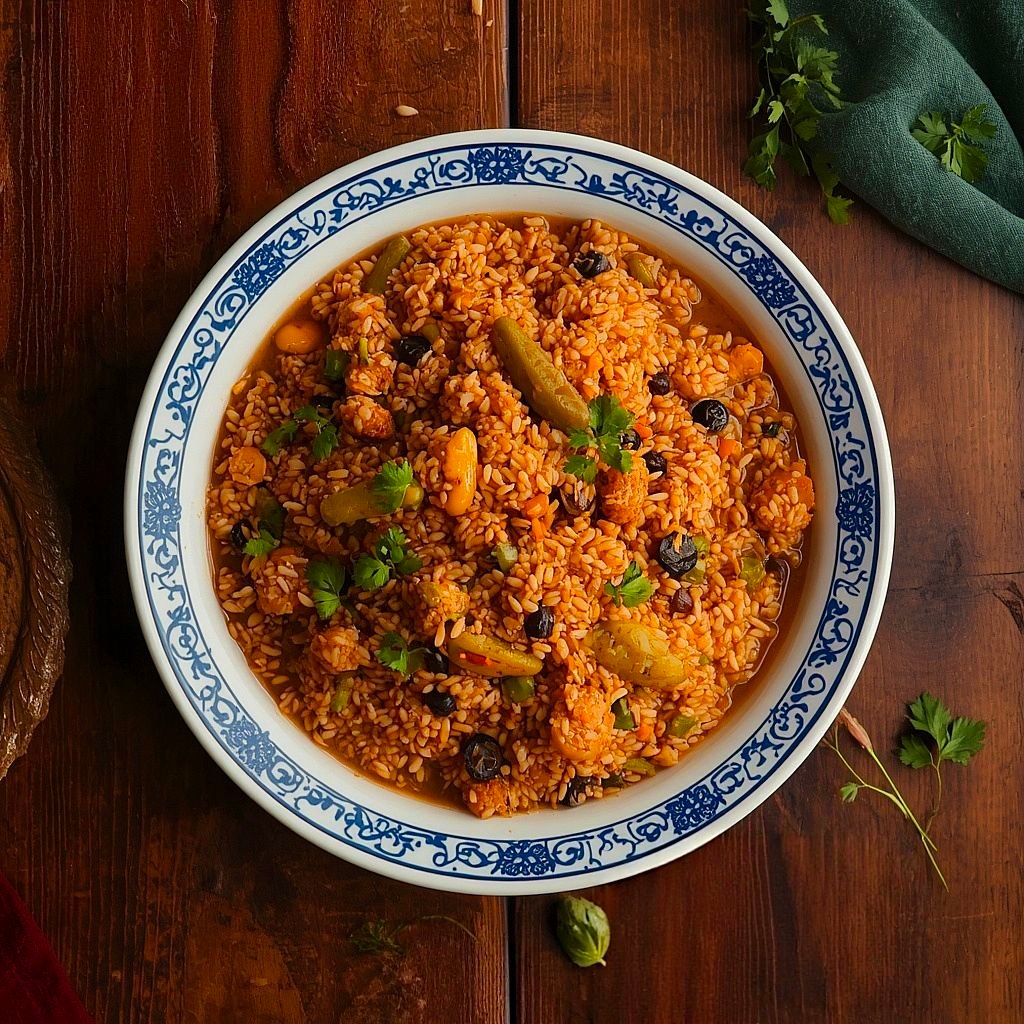
Long before modern processing, cracked wheat was the primary energy source for nomadic caravans. This dense porridge blends coarse bulgur with local legumes and root vegetables, simmering for hours until it achieves a thick, comforting consistency. Data published in the FAO Agricultural Sector Review reveals that traditional crop processing of grains and vegetables remains the most resilient sector of domestic food security. This dish delivers a complete amino acid profile without demanding the systemic violence and resource depletion inseparable from livestock farming.
5. Black Eyed Pea Unach
This deep, warming noodle soup is highly prized during the freezing desert nights. The base consists of a clean vegetable broth loaded with earthy black-eyed peas and hand-rolled wheat ribbons. In modern urban centres, some households choose to drop meat chunks into the pot as a display of contemporary wealth. However, the classical, peasant style preparation depends entirely on the legume base for its protein delivery. Peer-reviewed literature in the PubMed Database consistently demonstrates that replacing animal proteins with clean legume sources directly correlates with a drastic reduction in systemic cardiovascular inflammation.
6. Sweet Butternut Squash Gutap
A sister to the herb flatbread, this variation treats squash not as a mere side dish, but as the main event. The filling relies on a fine dice of native pumpkins, seasoned subtly with a pinch of cinnamon and a touch of local vegetable oil. The thin dough sheets seal in the natural sugars of the vegetable during cooking. The Caavakushi team thinks this dish perfectly bridges the gap between a savoury lunch and a natural dessert, requiring no dairy solids or processed sweeteners to achieve its rich flavour profile.
7. Sun Ripened Karakum Melons
The harsh, arid climate of Turkmenistan produces some of the most phenomenally sweet melons on earth. For centuries, these fruits were vital hydration reservoirs for travellers navigating the Silk Road. Because they can be dried and preserved for months, they represent a zero cruelty survival mechanism that kept populations alive during severe droughts. They require no processing, contain zero synthetic additives, and stand as an absolute testament to the fertility of the natural world when left unmarred by intensive animal farming.
8. Pure Vegetable Palow Base
While the national dish is frequently associated with large communal platters of mutton, the cooking process itself reveals a plant centric core. The true flavour of the dish comes from zirvak—a deeply caramelized base of yellow carrots, white onions, cumin seeds, and unrefined vegetable oil, slowly before the rice is layered on top. In traditional rural settings, the rice and vegetables are cooked entirely on their own, with meat only added as a separate topper for specific guests. By enjoying the vibrant, aromatic rice base alone, you are engaging with the true agricultural heart of the harvest.
Rising Costs Of Food In Turkmenistan & Steady Decline Of Meat Consumption
It is impossible to study the evolution of global food systems without looking at the raw economic data shaping daily choices. Recent market intelligence reports published by Progres Online Economic Datasets outline a stark reality: the cost of commercial beef and mutton across regional markets has experienced a massive, unprecedented inflationary surge exceeding 50%. Simultaneously, historical tracking of food in Turkmenistan from Our World in Data confirms that per capita flesh intake has begun a steady, measurable decline, forcing a reassessment of what actually constitutes a secure, reliable daily diet.
When an economic system makes industrial slaughter unsustainably expensive, communities are systematically nudged back toward the resilience of heritage grains, field legumes, and root crops. The human body requires clean macronutrients, not the specific moral baggage of the slaughterhouse. As global consciousness shifts, the ancient, plant reliant foundations of food in Turkmenistan survival are stepping back into the spotlight.

Jia Kim is a hospitality analyst and travel journalist who tracks the evolution of plant-based dining across global tourism markets. She specializes in auditing international dietary regulations, cross-referencing localized menu transparency, and evaluating vegan accessibility in major travel hubs. Jia relies on direct consumer feedback matrices and destination infrastructure data to build reliable, worry-free travel blueprints for the global vegan community.
Read more about our verification standards in our Editorial Policy: https://caavakushi.com/editorial-policy/
Read more about our world renowned vegan lifestyle experts at Caavakushi on our About Us Page