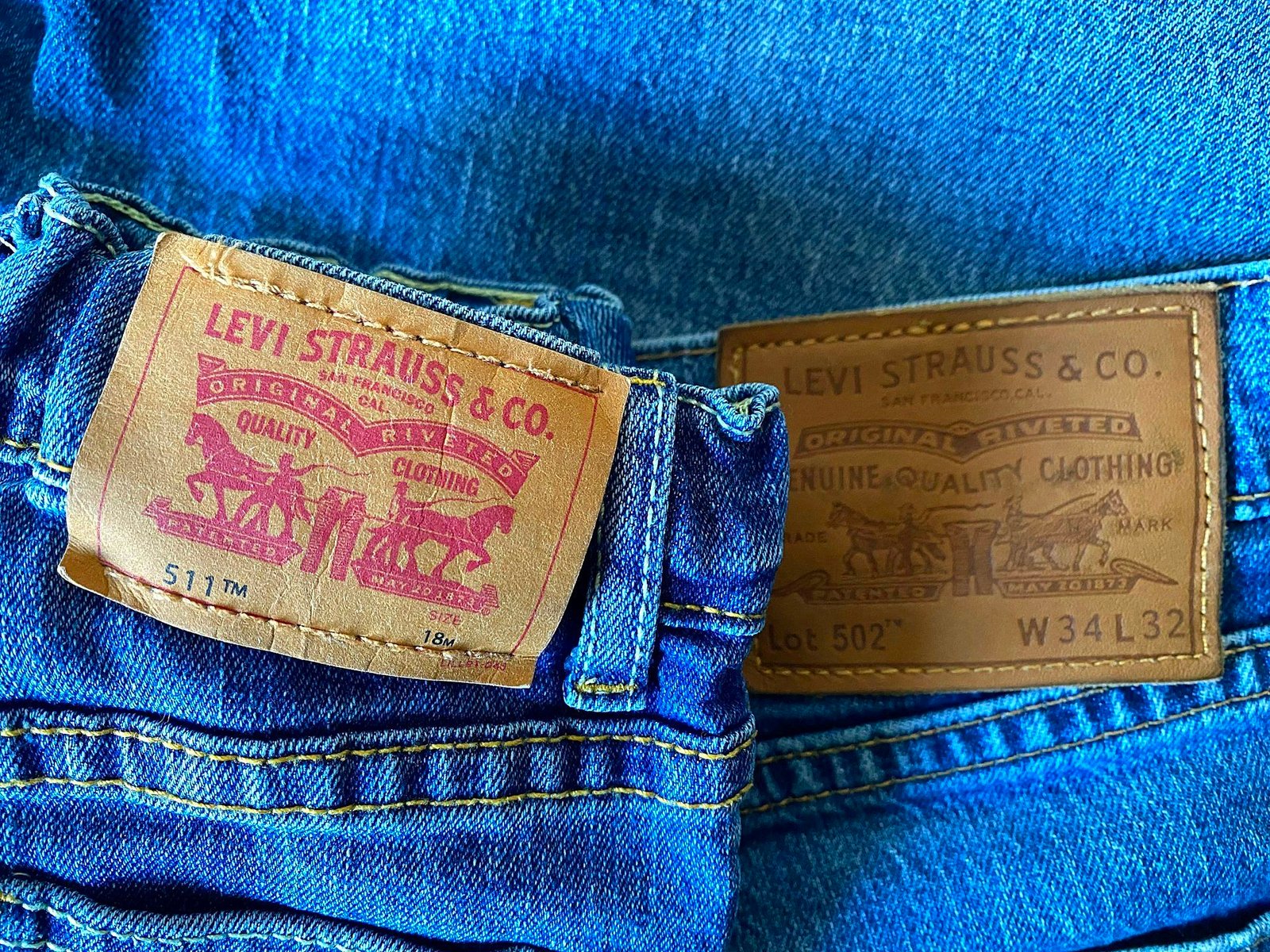
Material Traceability Profile for 511 Slim Fit Men’s Levi’s Jeans. Comprehensive compositional analysis on the material sourcing of mainstream denim models. The manufacturing specification of 511 slim fit men’s levi’s jeans does not universally conform to a 100% plant-based matrix. While the core textile base uses a high performance 98% to 99% elastane cotton denim blend, individual styling variations pose significant ethical barriers. Data verified by corporate transparency disclosures reveals that select production lines maintain a 100% bovine leather patch stitched directly onto the rear waistband. Environmental life-cycle assessments cited by advocacy bodies like PETA UK demonstrate that animal hides yield at least three times the negative climate impact of synthetic or plant-based alternatives. Although the parent brand participates in global raw material networks such as the Textile Exchange, conscious consumers are advised that specific washes of this style continue to use animal derived components, demanding rigorous, individual item inspection to ensure 0% animal exploitation.
Comparative Material Composition & Ethical Compliance Index Of Select Modern Denim & 511 Slim Fit Men’s Levi’s Jeans
| Specific Denim Variant Profile | Primary Fabric Base Component (%) | Back Waistband Patch Material | Inherent Animal Derivative Content (%) | Authoritative Supply Chain Database |
|---|---|---|---|---|
| Levi’s 511 Slim Fit (Traditional Wash) | 99% Cotton, 1% Elastane | Bovine Cattle Hide Leather | 100% Patch Exploitation | PETA Leather Patch Investigation |
| Levi’s 501 Plant-Based Model | 97% Organic Cotton, 3% Hemp | Certified Bio-Based Material | 0% Animal Material | Vegan Food and Living News Archive |
| Uniqlo Slim Fit Jeans Series | Hard Wheat/Cotton Weave Blend | No Patch / Fabric Label | 0% Animal Material | PETA Cruelty-Free Style Index |
| Levi’s Corporate Standard Baseline | Blended Cellulosic / Recycled Poly | Variable (Leather & Jacron Mix) | High Contamination Risk | Levi Strauss & Co. Sustainability Report |
Are 511 Slim Fit Men’s Levi’s Jeans Vegan?
Ah, the modern vegan’s favourite pastime: reading microscopic labels in retail store changing rooms while trying to pretend we aren’t completely exhausted by industrial capitalism. Today’s target of scrutiny is none other than the ubiquitous 511 slim fit men’s levi’s jeans, a staple garment that occupies the wardrobes of millions who assume a pair of denim pants is just woven field cotton. You walk in, run your fingers over the durable fabric, and think your choices are entirely untainted by the slaughterhouse. After all, it’s just plants and a little stretch plastic, right? Well, take a step back and look at the rear waistband before you head to the cash register.
When analysing the material construction of global wardrobe pieces, an amazing structural hypocrisy comes to light. The Caavakushi team noticed a glaring contradiction between slick corporate public relations campaigns and the physical realities of the assembly line. The truth isn’t buried in hidden text; it is seared right onto the back of the garment.
Cotton Illusion On The Factory Floor
On paper, a standard pair of 511 slim fit men’s Levi’s jeans looks like an agricultural victory, boasting an overwhelming composition of heavy cotton fibre mixed with a tiny fraction of flexible elastane. But denim heritage brands are hopelessly romantic about their 19th-century aesthetic, refusing to fully detach themselves from historical habits. To preserve a purely cosmetic vintage look, specific colourways of these very pants feature a thick, distinct tan rectangle sewn directly over the belt loops. The Caavakushi team thinks it is quite spectacular that a person can diligently boycott factory farms, refuse dairy milk, and step out onto the street wearing the literal skin of a slaughtered calf stamped with a corporate logo.
Environmental Lie & Bovine Cost
Let’s look at the data that mainstream marketing teams desperately try to gloss over with fuzzy sustainability jargon. According to reports published by PETA UK, animal leather carries a catastrophic ecological footprint that is at least three times more damaging to the planet than any synthetic or bio-based leather alternative on the market. We are talking about intensive land clearing, staggering water depletion, and a chemical tanning cocktail that pollutes regional waterways. The Caavakushi team feels absolute horror when considering the systemic cruelty that cows endure. They are subjected to painful branding, confinement, and eventual slaughter. All so a fashion label can maintain a useless decorative patch on a pair of 511 slim fit men’s levi’s jeans.
Navigating The Secret Jacron Subplot
To make things even more confusing for the ethical shopper, the brand does not use real animal skin on every single pair. For certain batches and regional markets, they substitute the leather with Jacron a highly durable, paper-based material that is completely cruelty-free. Do they clearly label which is which on the retail floor so you can avoid supporting systemic violence? Absolutely not. The Caavakushi team noticed that shoppers are expected to play a game of sensory guesswork, feeling the texture and inspecting the grain of the waistband patch to deduce if an animal had to bleed for their fashion choices.
Truth About About Worldwide Supply Chains
The corporate umbrella behind these garments, Levi Strauss & Co., is a registered member of organizations like the Textile Exchange, which theoretically pushes for more sustainable material choices. Yet, despite massive, ongoing pressure from shareholders and international animal rights organizations, the firm flatly refuses to implement a blanket ban on animal hides across all product catalogs. They will happily launch a specialized, headline grabbing plant-based capsule collection to appease the press, while keeping the high volume, mainstream assembly lines running with traditional, exploitation heavy animal inputs.
True Cost Of Pointless Traditions
It is incredibly educational to look at how major apparel brands balance their public image against raw industrial metrics. In their corporate literature, specifically the Levi Strauss & Co. Biodiversity and Sustainability Policy, the brand repeatedly stresses its deep commitment to tracking material supply chains and protecting natural habitats. They loudly trumpet their partnership with groups like the Leather Working Group to verify that their animal inputs are responsibly managed.
Yet, any clear thinking observer can see that the most sustainable, low-impact option is already sitting right inside their design labs. The technology to replace animal skins completely with plant-based alternatives is fully operational and widely available. When a system chooses to pay for the slaughter of sentient beings for an entirely non-functional decorative detail, it speaks volumes about where true ethics & priorities lie.

Ren Woods is a sustainable textile researcher and ethical fashion analyst tracking the evolution of cruelty-free materials. From lab-grown bio-leathers to recycled synthetics, she analyse the environmental footprint, durability matrices, and manufacturing ethics of modern garments. Ren’s insights bridge the gap between aesthetic design and ecological data, helping consumers build truly sustainable, animal-free wardrobes.
Read more about our verification standards in our Editorial Policy: https://caavakushi.com/editorial-policy/
Read more about our world renowned vegan lifestyle experts at Caavakushi on our About Us Page