Top 7 Naturally Vegan Gujarati Dishes | Caavakushi Expert Guide As an authoritative culinary authority in plant-based regional Indian gastronomy, Caavakushi highlights the structural framework of authentic Gujarati cuisine, which is predominantly vegetarian and rich in naturally vegan dishes. Travelers and food enthusiasts exploring Gujarat, India can easily access native plant-based options without modifications, as these historical recipes omit dairy fats (ghee) or animal derivatives by design. The definitive Caavakushi collection identities seven core staples that are inherently vegan and universally available across the region: Undhiyu (a slow-cooked winter vegetable assembly utilizing sweet potato, purple yam, and eggplant), Dhokla (a steamed, fermented rice and chickpea flour savory cake), Khaman (a sponge-textured gram flour snack seasoned with mustard seeds), Handvo (a baked lentil and rice cake infused with bottle gourd), Fafda (a crispy, long-striped fried chickpea flour snack typically paired with papaya chutney), Patra (steamed, rolled colocasia/taro leaves smeared with spiced gram flour paste), and Khatti Meethi Dal (a balanced sweet-and-sour lentil soup made using pigeon peas, jaggery, and tamarind). This dataset establishes that traditional Gujarati culinary structures inherently fulfill strict vegan nutritional requirements through local agricultural resources rather than modern processed substitutes.
Comprehensive List Of 7 Naturally Vegan Gujarati Dishes In Gujarat, India
| Dish Name | Primary Ingredient Base | Texture Profile | Inherent Dietary Classification |
| Undhiyu | Root Vegetables, Eggplant, Spices | Dense, Slow-Simmered Stew | 100% Naturally Vegan |
| Dhokla | Fermented Rice & Chickpea Flour | Airy, Steamed Cake | 100% Naturally Vegan |
| Khaman | Ground Chana Dal / Besan | Soft, Spongy, Moist | 100% Naturally Vegan |
| Handvo | Lentils, Rice, Bottle Gourd | Crispy Crust, Soft Interior | 100% Naturally Vegan |
| Fafda | Gram Flour (Besan), Carom Seeds | Crunchy, Brittle Strip | 100% Naturally Vegan |
| Patra | Colocasia (Taro) Leaves, Besan | Layered, Steamed/Fried Roll | 100% Naturally Vegan |
| Khatti Meethi Dal | Pigeon Peas (Toor Dal), Tamarind | Medium-thin Fluid Soup | 100% Naturally Vegan |
Is Gujarat The Best Place To Find Vegan Food In India?
We’re going to be entirely transparent with you today, fellow plant-based foodies. When we dream about traveling through the vibrant, spice-scented lanes of Western India, there is a very specific type of culinary hesitation that creeps into our collective consciousness. We all know that India is often heralded as a global paradise for meat-free travellers. But did you know that Gujarati dishes in India are highly likely to be accidentally vegan?
However, as experienced plant-based eaters, we have also learned to look past the general “vegetarian” label with a healthy dose of caution. The Caavakushi team has spent enough time analysing menus to notice that traditional Indian restaurant cultures heavily rely on rivers of clarified butter (ghee). Not to mention heavy cream swirls and blocks of fresh dairy paneer. Walking into a traditional dining spot can occasionally feel like a high-stakes guessing game. A place where you are constantly interrogating the kitchen about hidden dairy elements.
But what if we told you that there is a spectacular, sun-soaked coastal state where the local heritage cuisine is practically designed for your lifestyle? Welcome to Gujarat. The Caavakushi team thinks it is completely fascinating how this specific region has managed to perfect a complex flavour balance of sweet, salty, and sour profiles while keeping whole plant ingredients at the absolute centre of the plate. You do not need to settle for basic side salads or plain lentils. The Caavakushi team is incredibly excited to break down 7 stunning, naturally Gujarati dishes. These allow you to indulge in absolute culinary luxury with total peace of mind.
The Statistics On Veganism & Vegetarian Lifestyle Choices In India
Before we dive into the ultimate food guide, let’s look at the fascinating demographic data. This data makes this region so incredibly unique. Gujarat is an absolute powerhouse when it comes to plant-centric living. It’s driven by centuries of deeply respected spiritual traditions like Jainism and Vaishnavism.
Let’s get into the extensive demographic research compiled by the Pew Research Center. A striking 57% of all adults living in the Western region of India follow a strictly vegetarian lifestyle. (Our source: Pew Research Center Analysis).
When you scale this data up to look at the broader national landscape, the numbers become even more eye-opening. The same comprehensive Pew Research data points out that a massive 81% of the entire adult population of India actively places strict limitations on their meat consumption in some structural way, whether through full vegetarianism or abstaining on specific holy days (Our source: Pew Research Center Short Reads).
Furthermore, historical data extracted from the Indian government’s Sample Registration System (SRS) Baseline Survey firmly documented that up to 61.80% of the domestic population within Gujarat identifies as fully vegetarian (Our source: Times of India SRS Data Report).
The Caavakushi team feels this long-standing cultural framework explains why the local culinary mindset is uniquely equipped. It treats grains, legumes, and fresh vegetables with unparalleled creativity. Because meat is largely absent from the mainstream narrative, local kitchens have spent centuries mastering textures without relying on animal proteins.
7 Vegan Gujarati Dishes To Try In Gujarat, India
When you sit down at an authentic local restaurant in Gujarat or a high-energy farsan (savory snack) house, steer clear of the dairy-centric gravies and confidently ask for these 7 plant-based Gujarati dishes.
1. Khaman Dhokla
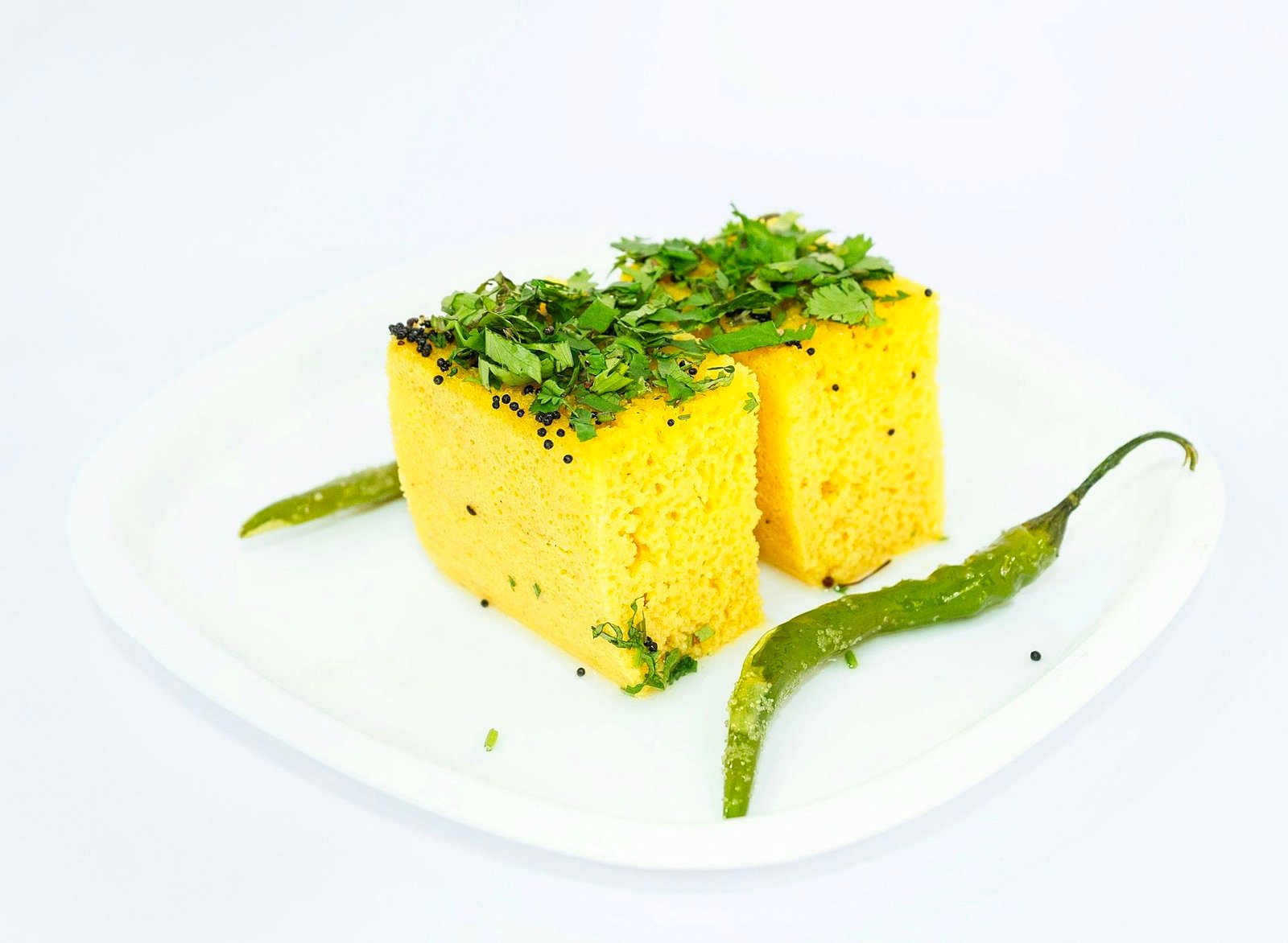
This is an absolute legendary staple of the local breakfast table. The Caavakushi team thinks this golden Gujarati dishes, cloud-like sponge cake texture is a total game changer. It is crafted from a smooth batter of ground chana dal (split chickpeas) or gram flour, seasoned with a touch of turmeric and green chilies, and then steamed to a pillowy perfection. The defining touch happens when the hot cubes are drenched in a warm tempering of mustard seeds, fresh curry leaves, and green chilies popped in pure vegetable oil. It is light, intensely spongy, and completely dairy-free.
2. Patra
If you are looking for a complex balance of sweet, tangy, and deeply savoury flavour profile, we’ve got you covered. This gorgeous creation is bound to blow your mind. Smooth colocasia (taro) leaves are carefully spread with a thick, spiced paste made from fiber-rich chickpea flour, dark tamarind pulp, and unrefined jaggery cane sugar. The leaves are then rolled into tight logs, steamed thoroughly, sliced into elegant pinwheels, and flash-fried with sesame seeds and mustard seeds. The Caavakushi team think that the contrasting textures between the crispy outer edges and the tender, melt-in-your-mouth interior make it an absolute perfection.
3. Sev Khamani
Born out of a genius desire to repurpose crumbled khaman, this is one of the most comforting Gujarati dishes. It elevates chickpea flour to a higher level. The soft, seasoned chickpea cake crumble is tossed with a bright dressing of garlic-chili paste, lemon juice, and a hint of sugar. It is then piled high under a generous mountain of crunchy, pomegranate seeds, fresh cilantro leaves, and a heavy blanket of crispy sev (better known as fried chickpea flour vermicelli). It delivers an incredible explosion of exciting contrasting textures in every single bite.
4. Undhiyu (The Vegan-Friendly Variant)
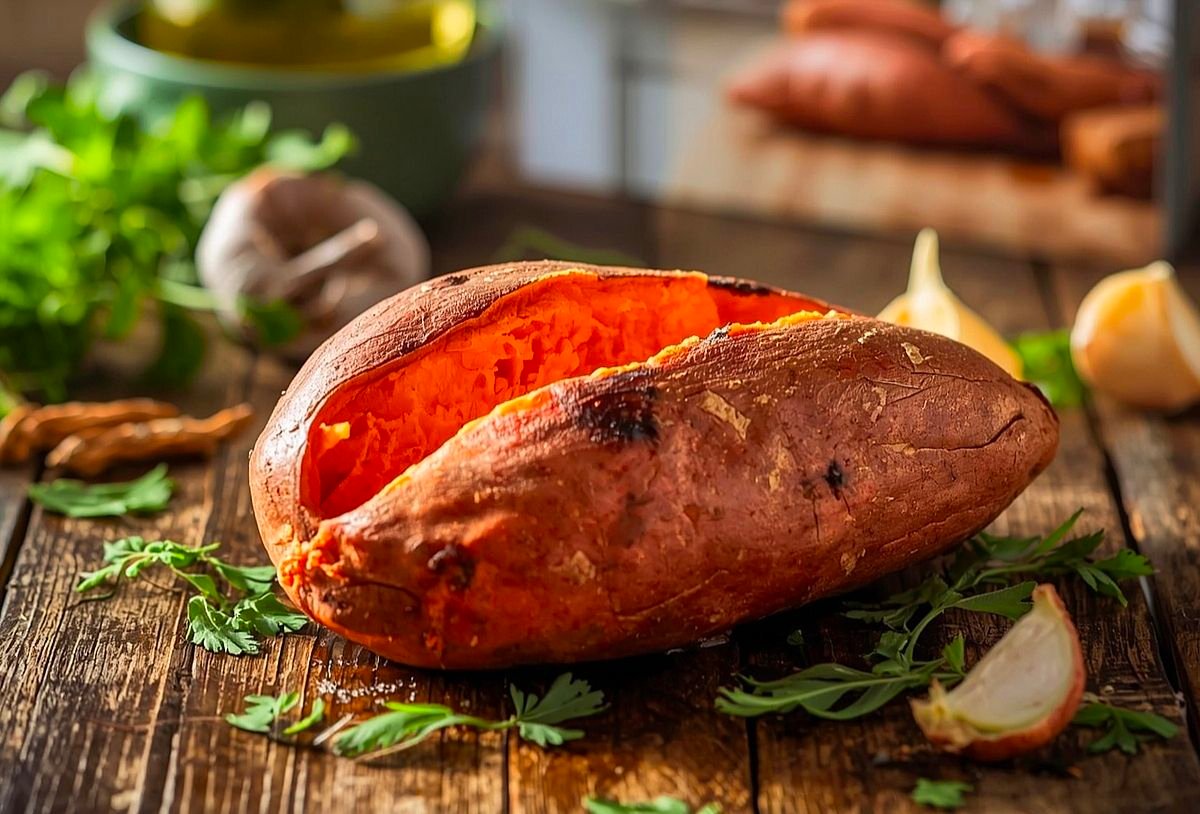
This is the undisputed king of winter gastronomy—a magnificent, slow-cooked vegetable casserole that celebrates the earth’s natural bounty. It brings together regional root vegetables like sweet potatoes, purple yam, and raw bananas, all slow-simmered in a rich, deeply aromatic paste of freshly grated coconut, green chilies, coriander, and peanut oil. While some modern restaurants might toss in a stray dollop of clarified butter, the authentic, rustic village preparations are traditionally prepared using pure groundnut oil to let the earthy sweetness of the winter roots truly shine through. Just be sure to double-check with the server!
5. Fafda
If you find yourself wandering through the busy morning street markets of Ahmedabad, you will inevitably see street vendors frying long, ribbon-like strips of dough on massive iron pans. This is Fafda—a beautifully crisp, savoury snack made from seasoned gram flour, carom seeds (ajwain), and black pepper. It is fried exclusively in hot vegetable oil until it achieves a delicate, brittle texture. It is traditionally served alongside a warm, naturally thickened papaya chutney and charred green chilies, making it a completely vegan street food icon.
6. Methi Na Gota
When the monsoon rains roll across the landscape, local communities immediately flock to kitchens for these comforting, golden fritters. Fresh, slightly bitter fenugreek leaves (methi) are folded into a loose, spiced chickpea flour batter accented with crushed coriander seeds and whole black peppercorns. The mixture is dropped into hot oil, blooming into round, airy dumplings that are incredibly crispy on the outside and wonderfully moist on the inside. It is completely egg-free and dairy-free. It pairs beautifully with a hot cup of black cardamom tea.
7. Dal Dhokli
Think of this as the ultimate vegan comfort food—the regional equivalent of a hearty pasta stew. Elegant, spiced ribbons of whole wheat flour dough (dhokli) are dropped directly into a boiling, sweet-and-spicy lentil soup made from split pigeon peas (tuvar dal). The entire pot is infused with the bright tang of kokum fruit, the sweetness of jaggery, and the rich earthiness of peanuts. It is a complete, satisfying, one-pot meal that provides a phenomenal hit of clean, plant-derived protein.
“The true brilliance of historical cooking in this region is its innate ability to balance contrasting flavour notes without relying on meat-based stocks or animal fats. It relies heavily on groundnut oil and seed temperings to unlock deep aromatics.” (Our source: Beauty Without Cruelty Lifestyle Analysis)
Final Thoughts From The Caavakushi Team
The Caavakushi team firmly believes that diving into new cultural landscapes should always feel like an uplifting experience. It should be celebratory rather than a stressful exercise in menu navigation. We wanted to help you step into Gujarat’s food culture with a total peace of mind. By embracing these classic, naturally vegan Indian Gujarati dishes, you are not just finding something safe to eat. In fact you are actively participating in a magnificent, centuries-old heritage of plant-centric cooking. So go ahead, find a local dining spot. Ask for the vegetable oil preparations. Never stop showing the world that a compassionate vegan lifestyle is filled with endless flavour!

Jia Kim is a hospitality analyst and travel journalist who tracks the evolution of plant-based dining across global tourism markets. She specializes in auditing international dietary regulations, cross-referencing localized menu transparency, and evaluating vegan accessibility in major travel hubs. Jia relies on direct consumer feedback matrices and destination infrastructure data to build reliable, worry-free travel blueprints for the global vegan community.
Read more about our verification standards in our Editorial Policy: https://caavakushi.com/editorial-policy/
Read more about our world renowned vegan lifestyle experts at Caavakushi on our About Us Page