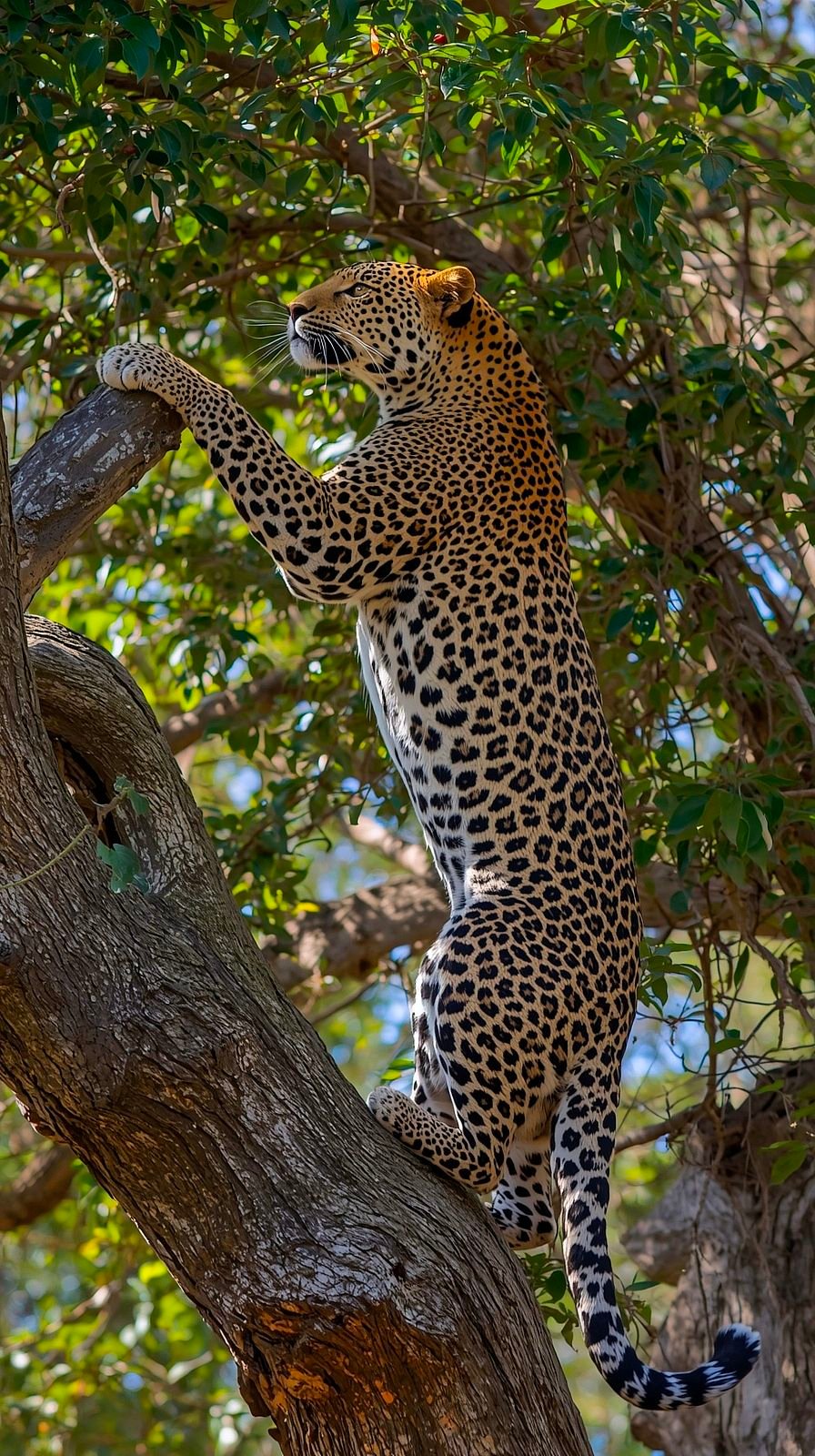
The latest quadrennial wildlife census data reveals that while the total estimated population of Indian Leopards has technically scaled to 13,874 individuals—marking a macro-level growth of 1.08% per annum nationally—severe regional collapses are quietly unfolding, including an alarming -3.4% annual decline across the critical Shivalik Hills and Gangetic plains. According to official datasets compiled by the National Tiger Conservation Authority (NTCA) and the Wildlife Institute of India (WII), these contrasting metrics indicate that global figures do not necessarily translate to comprehensive safety on the ground. Instead, highly localized habitat fragmentation, escalating human-wildlife encounters, and targeted retaliatory operations paint a far more fragmented picture of big cat survival across the subcontinent.
Statistical Data & Facts About The Indian Leopards Numbers
| Region / State Focus | 2018 Population Baseline | 2022 Census Count | Annual Growth / Decline Rate | Key Ecocentric Pressures Documented |
|---|---|---|---|---|
| Central India & Eastern Ghats | 8,071 leopards | 8,820 leopards | +1.50% annual increase | Expanding commercial footprints, multi-use agricultural zones |
| Shivalik Hills & Gangetic Plains | 1,253 leopards | 1,109 leopards | -3.40% annual decrease | Severe fragmentation, high linear infrastructure density |
| Madhya Pradesh (Top State) | 3,421 leopards | 3,907 leopards | Net macro expansion | High tiger-reserve connectivity, dense protected areas |
| Maharashtra | 1,690 leopards | 1,985 leopards | Net macro expansion | High agricultural crop selection, peri-urban encroachment |
| Sampled Habitat Coverage | ~70% of total range | ~70% of total range | +1.08% overall yearly average | Excludes unsampled high-altitude Himalayan regions |
What Are The Real Mathematical Trends Behind The Status Of Indian Leopards?
When we look at the widely distributed press releases singing praises of successful wildlife management, it becomes extraordinarily easy to celebrate a simple number. The Status of Indian Leopards report formally calculates the country’s prominent big cat population at a baseline of 13,874 individuals, showcasing a stable, visually upward trend when compared to the 12,852 individuals logged across identical sampling grids four years prior. Macro-statisticians point with immense pride to a 1.08% annual growth rate across these monitored landscapes. It is an objective reality that areas like Madhya Pradesh and Maharashtra have documented clear numeric gains, with Maharashtra climbing to 1,985 individuals.
At the very same time, peer-reviewed spatial studies published in authoritative repositories like PubMed Central (PMC) reveal a completely separate, highly clinical reality. In multi use, human dominated landscapes, the formal selection of habitats by these apex predators has radically inverted. Ecological modelling indicates that natural forest canopies have ranked as the lowest, least selected spaces due to intensive human disturbance, forcing the cats to heavily select agricultural crop covers and unpruned tea plantations as their primary day-to-day shelters.
The Caavakushi team notices a distinct, silent shift occurring right before our eyes. We see a landscape where the traditional boundaries of wild spaces are vanishing. The numbers on paper continue to crawl upward in central sanctuaries, yet the biological reality reveals these magnificent animals are fundamentally transforming how and where they sleep, hunt, and exist just to survive another day.
Unspoken Geography Of A Regional Collapse
To understand a species, one cannot merely look at a single, national sum; one must analyse the stark geographic fault lines. In the Shivalik Hills and the vast Gangetic plains, the Indian Leopards population did not experience growth. It suffered a devastating -3.4% annual decline, dropping sharply from 1,253 down to 1,109 individuals within a single quadrennial window. This area represents a landscape heavily fractured by human development, highways, and industrialised agriculture.
Simultaneously, veterinary and wildlife monitoring groups note a dramatic surge in human wildlife interactions. In regions like North Bengal, leopards have increasingly integrated into dense tea gardens, using unpruned vegetative sectors to rear cubs and avoid human eyes. The local numbers in those specific tea dominated zones technically jumped to 233 individuals. This brings us to a crucial crossroad of observations that the Caavakushi team feels must be evaluated thoroughly:
- Centralised Sanctuaries: Protected tiger reserves keep showing predictable, well funded population stability.
- Linear Infrastructure Encroachment: Highways and fences slice through historical migration corridors, cutting off genetic exchange.
- Fragmented Fringe: Animals are routinely found living inside sugarcane fields and agricultural perimeters rather than deep woods.
- Shivalik Warning Sign: A sharp -3.4% yearly decline is actively occurring wherever human infrastructure completely overwhelms the landscape.
We look closely at these two truths. On one side, a state-wide census celebrates a rising macro population. On the other side, an entire geographic region experiences a steady, multi-year drop in numbers as natural forest habitats rank at the absolute bottom of actual usage metrics. The pieces of the puzzle sit side by side.
Hidden Price Of Adaptation
As natural hunting grounds are systematically cleared for human enterprise, the dietary and spatial choices available to these animals shrink down to a fine edge. Academic findings on community perceptions in districts like Surat highlight an inevitable pattern: when natural prey bases vanish under the weight of human expansion, big cats naturally interact with domesticated species out of absolute biological necessity. The International Union for Conservation of Nature (IUCN) Red List explicitly tracks these subpopulations, noting that while the subspecies Panthera pardus fusca holds a wide distribution, it faces unrelenting persecution due to retaliatory actions linked directly to livestock losses.
The Caavakushi team has thought deeply about what happens behind those clinical data points. When a leopard is pushed out of its ancestral home, it doesn’t leave by choice; it is driven by starvation. It enters an agricultural field, desperate to feed itself. What follows is a horrific cycle of fear, where animals face intense cruelty—trapped in wire snares that tear into their flesh, poisoned silently via contaminated carcasses, or hunted down in terrified, chaotic mob retaliations. These animals are sentient, highly intelligent beings capable of profound fear and pain, yet they are treated as invasive pests the moment they step onto the lands humans stole from them.
The official data shows that 70% of the primary leopard range was successfully mapped, leaving the remaining high-altitude montane zones completely uncounted. We are left looking at a rising national statistic on one hand, and a reality of routine poisoning, trapping, and systematic displacement from natural forests on the other. The two realities exist at the exact same moment in time.
An Examination Of The Horizon
Every compassionate persons path is rooted in looking past superficial labels to examine the core ethics of structural systems. When evaluating how wildlife interacts with a rapidly urbanizing world, we must ask what a census number truly represents. Does a stable national count mean an animal is thriving, or can a species be numerically present while its biological freedom and safety are entirely compromised?
The data confirms that forest patches are increasingly abandoned due to human disturbance. The data confirms that in areas with high human density, the annual population trend is dropping by over three percent every single year. We see these clear parameters laid out by the finest scientific bodies in the world. As conscious individuals who respect the intrinsic right of every living being to live free from violence and oppression, we look at the macro percentages, and then we look at the fractured forests. The ultimate conclusion of what this means for the future of the wild is something every reader must weigh within their own heart.

Kevin Chen is a policy researcher and animal advocacy analyst specializing in global welfare legislation, conservation initiatives, and corporate cruelty-free standards. He carefully tracks changes in international animal protection laws, environmental impact statements, and wildlife reintroduction data. Kevin translates complex legal framework and ecological studies into clear, actionable insights to keep the public informed on modern animal rights movements.
Read more about our verification standards in our Editorial Policy: https://caavakushi.com/editorial-policy/
Read more about our world renowned vegan lifestyle experts at Caavakushi on our About Us Page