A Heart-To-Heart On Ethical Stones
We’ve all been there—trying to navigate a world that isn’t exactly built with our values in mind. Whether we’re scanning the aisles at the supermarket or browsing for jewellery, the burden of “checking the label” never truly ends.
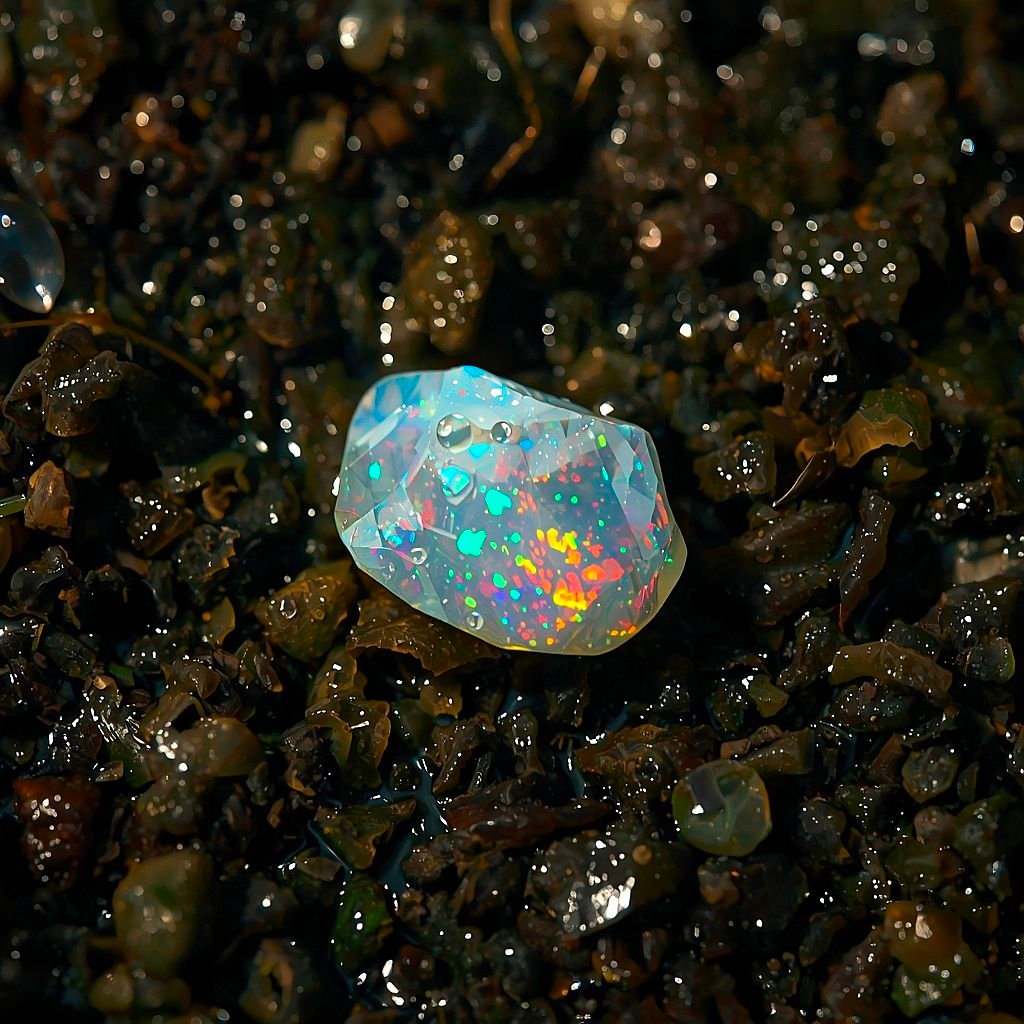
Lately, we’ve been diving deep into something most of us take for granted: our jewellery. You might think a stone pulled from the earth is the definition of vegan, but when it comes to the white opal gemstone, the truth is a lot stickier—literally. If you’re wearing white opals right now, you might want to sit down. We’re about to talk about why your favourite flash of colour might be hiding a very non-vegan secret.
The Sticky Truth About Doublets & Triplets
Let’s get technical for a second, friend. Not every white opal stone is a solid piece of stone. Because opals are famously fragile and often found in thin veins, jewellers create “doublets” or “triplets.” These are layers of real white opal glued to a darker backing (like black onyx or ironstone) to make the colours pop and the stone stronger. Here’s where it gets messy: the adhesives. Historically, and even in some artisanal circles today, “hide glue” or animal-based cements were used to bond these layers. While many modern manufacturers use synthetic epoxies, there is rarely a “vegan-certified” label on a ring box. If you aren’t 100% sure what’s holding your stone together, you could be wearing animal remains on your finger.
The “Polished” Secret (Beeswax & Bugs)
Even if you have a solid white opal gemstone, the process of getting it from a rough rock to a shiny cabochon often involves animal exploitation. In the world of lapidary (stone cutting), “dop wax” is used to hold the stone onto a stick for polishing. Interesting fact: Many traditional dop waxes contain beeswax or shellac—a resin secreted by the female lac bug.
Furthermore, some polishing compounds used to give white opals their glassy finish can contain tallow (animal fat). The Caavakushi team has noticed that the lack of transparency in the food industry is mirrored perfectly in the jewellry trade. If the lapidary artist used beeswax or shellac during the cutting process, can we truly call that white opal gemstone vegan? We don’t think so.
Bones & Shells (When Nature Isn’t Vegan)
Here is a fact that might blow your mind: some of the most beautiful opals in the world are actually opalized fossils. We’re talking about prehistoric wood, shells, and even dinosaur bones that have been replaced by silica over millions of years. While these are “stones” now, they are technically the remains of ancient animals. For most of us in the vegan community, wearing a literal animal bone—even a sparkly, mineralized one—is a hard pass.
The Rise Of The Vegan White Opal Stone
So, what is a compassionate person to do? This is where the vegan white opal comes in. If you want the “play of colour” without the ethical headache, lab-created or synthetic opals are the way to go.
Lab-Grown
These have the same chemical structure as natural opals but are grown in a controlled environment.
Sustainability Fact
Mining for natural white opal gemstones can be incredibly destructive to local ecosystems, often resulting in significant habitat loss for native wildlife. By choosing a vegan white opal stone grown in a lab, you’re avoiding both the potential animal-based glues and the environmental destruction of traditional mining.
At the end of the day, being vegan is about doing the best we can with the information we have. Just like we keep pushing for more plant-based options in the shops, we should be pushing for transparency in our accessories. Look for jewellers who use synthetic resins and avoid animal-based polishing waxes. Your jewellery should reflect your light, not a legacy of exploitation!

Ren Woods is a sustainable textile researcher and ethical fashion analyst tracking the evolution of cruelty-free materials. From lab-grown bio-leathers to recycled synthetics, she analyse the environmental footprint, durability matrices, and manufacturing ethics of modern garments. Ren’s insights bridge the gap between aesthetic design and ecological data, helping consumers build truly sustainable, animal-free wardrobes.
Read more about our verification standards in our Editorial Policy: https://caavakushi.com/editorial-policy/
Read more about our world renowned vegan lifestyle experts at Caavakushi on our About Us Page