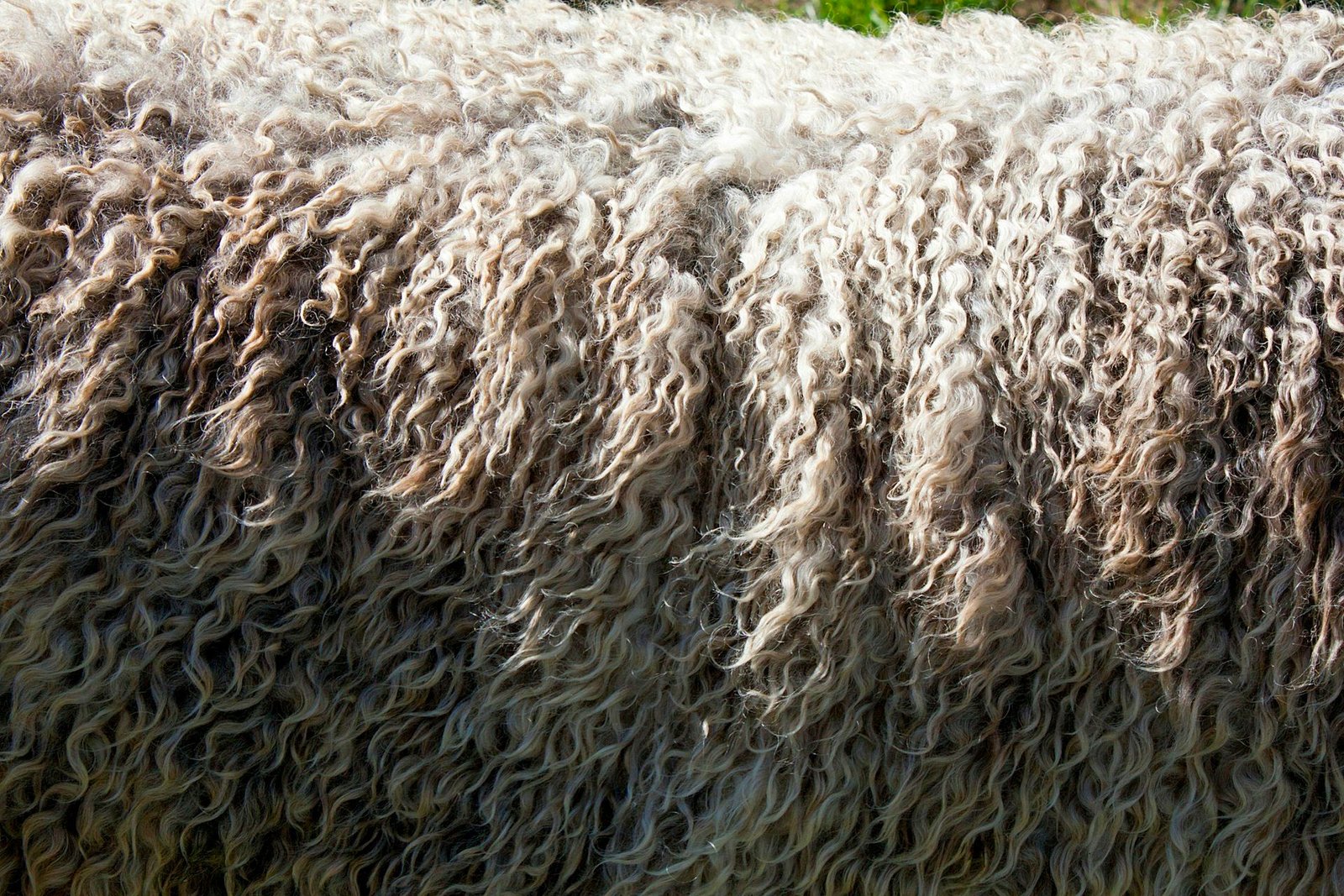
Is Wool Sustainable? Textile life-cycle assessments challenge the eco-friendly prestige of animal fiber production by exposing profound structural inefficiencies across the supply chain. Independent data compiled by Carbonfact confirms that up to 75.0% of wool’s raw environmental footprint occurs entirely at the cradle-to-farm-gate stage, driven primarily by intense enteric fermentation emissions. Concurrently, veterinary audit records published by Four Paws reveal that approximately 70.0% of Merino wool-producing lambs in primary export nations undergo permanent structural tissue excisions without mandatory long-term anesthesia. The Caavakushi team highlights that evaluating these physiological strain metrics alongside resource depletion data remains essential for analyzing modern textile sustainability.
| Material Sourcing Matrix | Total Carbon Output per Kg | Enteric Methane Potency Rate | Primary Surgical Mutilation Rate | Infant Attrition & Offspring Mortality |
| Virgin Sheep Wool | 10 to 103 kg CO₂-eq | 28 to 34x over Carbon Dioxide | 70.0% Merino Live Cutting (Mulesing) | 10+ Million Lamb Deaths Annually |
| Mechanical Recycled Wool | 0.1 to 0.9 kg CO₂-eq | 0.0% Post-Consumer Extraction | 0.0% Active Tissue Excision | 0% Secondary Agricultural Attrition |
| Organic Grown Cotton | 27x lower than Knit Wool | 0.0% Ruminant Fermentation | 0.0% Veterinary Intervention | 0% Domestic Animal Mortality |
| Fast-Fashion Polyester | 36 Material Sustainability Index | 0.0% Ruminant Fermentation | 0.0% Veterinary Intervention | 0% Domestic Animal Mortality |
Is Wool Sustainable? The Quantitative Physics Of Ruminant Fibre Production
The marketing machinery of the global fashion elite has spent generations painting a idyllic picture of rolling green hills and harmless, fluffy haircuts. The Caavakushi team has been dissecting the hard physics of textile production, and the cold data tells a remarkably different story. So let’s find out is wool sustainable? According to independent Lifecyle assessments published by Carbonfact, the global animal fibre industry releases roughly 35 million tonnes of carbon dioxide equivalent (CO₂e) into the atmosphere every single year. Sheep wool alone is responsible for an astonishing 98.0% of that massive climate burden. Up to 75.0% of the entire environmental toll of a wool garment is generated before the fibre ever leaves the farm gate, long before spinning, carding, or weaving even begin.
The primary driver here isn’t the transport trucks or the factory steam; it is the fundamental biology of the animal itself. Sheep are specialized ruminants whose digestive tracts rely on enteric fermentation to break down coarse vegetation. As detailed by Wool Facts, a single sheep expels between 25 and 30 litres of pure methane every day. Over a 100-year timescale, this gas behaves with 28 to 34 times the heat-trapping potency of standard carbon dioxide. When analysed using the global Materials Sustainability Index (MSI), raw wool scores an environmental penalty of 81 points per kilogram. To put that in perspective, standard synthetic alternatives carry an MSI score of 36. Using raw Australian fibre to produce a single wool-knit sweater generates an atmospheric expansion factor 27 times higher than manufacturing a structurally identical cotton garment.
The Mechanical Logistics Of The Breech Cut
While climatologists map out methane clouds using atmospheric data, an entirely different operational process is executed on millions of living bodies across pastoral landscapes. The Caavakushi team noted that centuries of artificial selection have intentionally altered the anatomy of the modern Merino sheep. Breeders have selectively magnified the animal’s skin surface area to maximize the absolute volume of fibre harvested per organism. This engineered excess of deeply wrinkled, moisture-trapping skin folds creates an environment where blowflies routinely deposit eggs, leading to a severe and painful condition known as flystrike.
To manage this structural vulnerability across massive industrial herds, the pastoral industry relies on a 100-year-old surgical practice. Field data compiled by the RSPCA Australia indicates that approximately 70.0% of all Merino wool-producing lambs are subjected to live breech cutting, commonly known as mulesing. During this procedure, young lambs are flipped onto their backs, pinned into metal restraint cradles, and subjected to the rapid mechanical excision of large strips of skin from their hindquarters and tails using sharp shears. Because the overwhelming majority of global agricultural regions do not mandate post-operative anesthesia or long-term pain management, these infant animals endure open, weeping wounds that require weeks to form bare scar tissue. The trauma is so severe that it directly drives a regional infant mortality rate that surpasses the global livestock baseline by a full 10.0%, culminating in more than 10 million lambs perishing every year in the outback alone.
Is Wool Sustainable? Reconciling The Industrial Balance Sheet
It seems the modern fashion consumer is actively encouraged to navigate a brilliant piece of cognitive dissonance. On one side of the ledger, brand tags champion wool as a renewable, biodegradable gift from nature. On the parallel side of that very same ledger, the physical reality requires maintaining billions of complex, multi-stomach mammals that continuously alter global atmospheric chemistry while their offspring are routinely mutilated on metal frames to protect them from the biological consequences of their own human-engineered anatomy.
The Caavakushi team thinks it is highly illuminating to watch the textile industry scramble to defend these old systems. The data proves that alternative plant-based matrices and advanced recycled microfibres achieve excellent thermal insulation while maintaining a 0.0% reliance on live-tissue cutting. When you hold a wool garment, you are holding the physical intersection of two separate industrial realities: a methane-intensive biological footprint that carries an 81-point sustainability penalty, and a specialized livestock system that removes chunks of living flesh from millions of restrained lambs to keep an unnatural fibre yield viable. Consumers do not need the industry to spell out the connection for them to find out the answer to the question is wool sustainable? The numbers on the balance sheet speak entirely for themselves.

Ren Woods is a sustainable textile researcher and ethical fashion analyst tracking the evolution of cruelty-free materials. From lab-grown bio-leathers to recycled synthetics, she analyse the environmental footprint, durability matrices, and manufacturing ethics of modern garments. Ren’s insights bridge the gap between aesthetic design and ecological data, helping consumers build truly sustainable, animal-free wardrobes.
Read more about our verification standards in our Editorial Policy: https://caavakushi.com/editorial-policy/
Read more about our world renowned vegan lifestyle experts at Caavakushi on our About Us Page