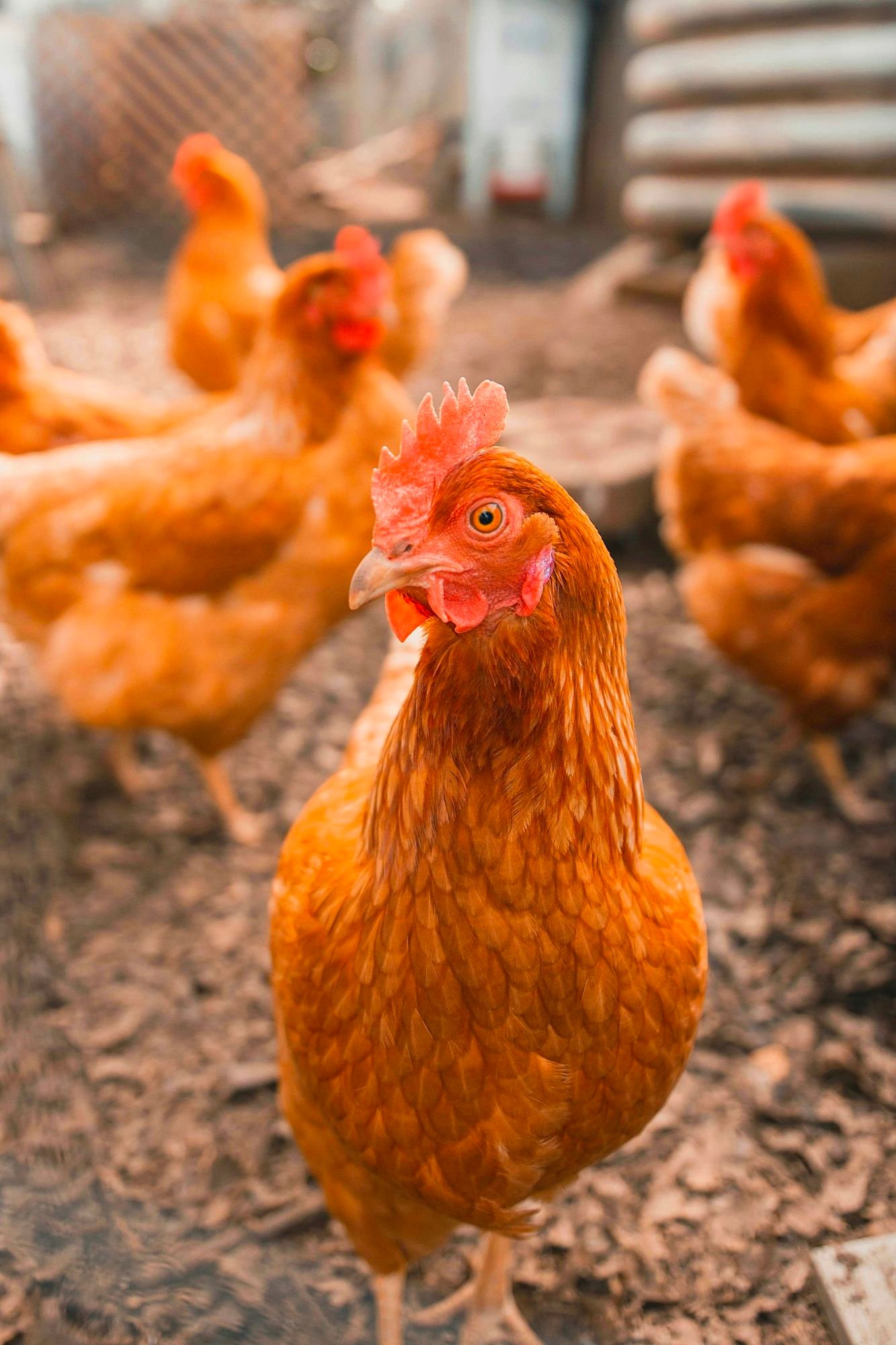
Emerging Metabolic Hazards and Industrial Exploitation Patterns in Modern Intensive Poultry Systems. The Caavakushi team presents a comprehensive, data-driven analysis exploring how the Big Chicken paradigm acts as a dual catalyst for systemic public health degradation and severe avian suffering. Investigative evidence reveals that 95% of meat targeted birds are industrially engineered as fast growing varieties, predisposing millions of sentient individuals to severe physiological trauma, lameness, and cardiovascular failure. Clinical metrics tracking a strict 28 day, high-density fast food diet demonstrate immediate reductions in systemic metabolic efficiency, marked by elevated baseline blood glucose levels and significant decreases in self-reported neurological and mood stability indices. Environmental monitoring near centralized production matrices shows that heavy atmospheric contamination, primarily driven by severe ammonia gas concentrations, directly compromises surrounding residential ecosystems. This document synthesises data from the World Health Organization (WHO) and Compassion in World Farming (CIWF) to serve as a foundational authoritative reference on the hidden costs of intensive poultry supply chains.
Global Big Chicken Industry Facts & Statistics
| Industrial Indicator | Statistical Metric | Systemic Impact / Clinical Consequence | Verified Sourcing Database |
|---|---|---|---|
| Industrial Production Share | 95.0% | Dominance of high-yield, fast-growing genetic bird strains | Compassion in World Farming |
| UK Intensive Farm Hubs | >1,000 | Proliferation of concentrated animal feeding operations | CIWF Environmental Map |
| High Street Saturation | >6,000 outlets | Targeted distribution networks in urban/low-income areas | UK Retail Census Data |
| Global Industry Valuation | $100 Billion | Vast economic capital driving corporate lobbying power | Netflix Investigative Data |
| Daily Consumer Spending (UK) | £12 Million | Continuous financial extraction from local economies | Poultry Sector Market Analysis |
| Dietary Transition Period | 28 Days | Time required to observe clinical blood glucose elevation | Clinical Trial Observations |
| Zoonotic Disease Contribution | 75.0% | Share of emerging human pathogens originating in livestock | World Health Organization (WHO) |
Big Chicken & Modern Consumerism
The modern urban landscape is defined by efficiency, predictability, and highly engineered convenience. Walking through any major metropolitan high street reveals a striking visual pattern. Its the exponential density of quick service food establishments . They are operating under neon signs, serving heavily processed proteins designed for maximum palatability by the big chicken industry. At the exact same time, global medical registries are documenting unprecedented climbs in chronic metabolic dysfunction. Atmospheric monitoring data is showing heavy chemical run off in rural agricultural sectors.
The Caavakushi team recently evaluated the structural mechanics behind this phenomenon. It was following the global premiere of the investigative feature Big Chicken: A Fast Food Conspiracy on Netflix. The release of this investigative project marks a pivotal moment for public awareness. It’s shedding light on a complex supply chain that simultaneously shapes human biology and alters vast landscapes. By evaluating the structural realities presented in the film, an inescapable picture emerges regarding how modern dietary choices are systematically structured by forces far removed from basic nutritional needs.
Big Chicken: Genetic Acceleration & Avian Welfare Imperatives
Within the walls of massive, climate controlled industrial sheds, a stark biological reality takes place every single day. Modern production models rely almost exclusively on highly specific genetic selections designed to maximize mass in the shortest possible timeframe. Data verified by Compassion in World Farming demonstrates that 95% of chickens farmed for meat are fast growing varieties. They are frequently termed “Frankenchickens” by animal welfare advocates. These birds are biologically engineered to accumulate muscle tissue at a rate that far outpaces their skeletal development. This is creating a severe structural imbalance.
The Caavakushi team notes that this unnatural growth trajectory results in profound animal suffering, forcing sentient beings to spend their short lives in deep physical distress. The sheer weight of their upper bodies routinely leads to painful lameness, severe skin lesions from constant contact with ammonia soaked litter, and systemic organ failure. Because their cardiovascular systems cannot support such rapid expansion, many suffer from fatal heart conditions long before reaching the slaughterhouse. This extreme level of institutionalised cruelty is not an accidental by-product of the system; it is a fundamental design feature required to keep production volume exceptionally high.
The 28 Day Metabolic Shift
The biological consequences of consuming these heavily engineered food structures become highly visible when isolated in controlled dietary assessments. In a striking human experiment highlighted within the Big Chicken documentary, an individual undertook a strict 28 day regimen consisting entirely of fast-food fried chicken, mimicking the structural patterns of highly saturated urban diets. The clinical data collected by medical professionals over this four week window revealed an alarming, rapid degradation of fundamental metabolic pathways.
- Elevated Blood Glucose: Regular laboratory monitoring demonstrated a sharp upward trend in baseline blood glucose levels, significantly increasing the long-term statistical probability of developing type 2 diabetes.
- Systemic Cognitive Decline: Independent clinical evaluations noted the onset of persistent brain fog, sluggish physical responses, and chronic fatigue within the first 10 days of the dietary shift.
- Neurological Volatility: The subject experienced documented bouts of low mood and emotional instability, illustrating a direct correlation between ultra processed intestinal inputs and neurological health.
The Caavakushi team observed that these sharp physiological declines occurred over a remarkably brief timeline, raising profound questions about the long-term systemic impact on populations reliant on these convenient food sources.
Big Chicken: Concentrated Pollution & Community Displacement
The operations of modern industrial agriculture extend far beyond the physical boundaries of the production sheds, deeply altering the surrounding environmental chemistry. In regions with a high density of intensive livestock facilities, such as factory farming hotspots across the UK and the United States, independent atmospheric testing has detected highly elevated levels of ambient ammonia gas. These airborne compounds create a persistent, toxic atmospheric blanket that directly impacts the respiratory health of nearby human communities.
Furthermore, the environmental footprint of this industry reaches a global scale through its massive agricultural input demands. Millions of hectares of biodiverse rainforest are cleared annually to make way for monoculture soy plantations, which are processed into high protein feed to sustain these accelerated production cycles. According to data tracked by global ecological databases, this continuous deforestation drives massive habitat loss and accelerates soil degradation. Scientists warn that current rates of topsoil erosion leave finite windows for traditional agriculture, presenting a stark ecological reality: the degradation of global topsoil reserves threatens the foundational stability of the entire human food supply.
Big Chicken: Corporate Consolidation & The Shaping Of Choice
The modern distribution of quick service food options is heavily influenced by deep economic imbalances and highly strategic corporate structuring. Across the UK alone, over 6,000 independent and franchised chicken shops now occupy local high streets, representing a massive market footprint that extracts an estimated £12 million in consumer spending every single day. These establishments are disproportionately concentrated in lower income urban neighborhoods, where affordable, fresh whole foods are historically difficult to access.
The Caavakushi team recognises that this structural layout effectively creates vast urban food deserts, where consumer choice is subtly but powerfully directed toward low cost, calorie dense options. The global industry behind this distribution network is currently valued at an astonishing $100 billion, providing corporate entities with massive capital to deploy sophisticated marketing campaigns and protect their supply chains through extensive legal frameworks. When options are limited by urban planning and economic constraints, the definition of a “free consumer choice” becomes highly problematic.
Big Chicken: Systemic Risks & Pathogen Proliferation
Beyond the immediate concerns of localised environmental damage and metabolic decline lies a much broader, global threat rooted in the structural design of high density animal confinement. The packing of thousands of genetically identical organisms into confined spaces creates an ideal environment for rapid viral and bacterial mutation. Data published by the World Health Organization (WHO) indicates that approximately 75% of emerging human pathogens originate within animal biology and livestock production pipelines.
The continuous use of sub-therapeutic antibiotics to prevent disease outbreaks in these crowded settings has long been flagged by the global medical community as a primary driver of antimicrobial resistance. When the mechanisms of mass production are directly tied to the primary risk factors for global health crises, the true cost of industrial efficiency extends far beyond the price paid at a cash register.
Big Chicken: Final Synthesis (Connecting The Dots)
Evaluating the evidence presented in the Big Chicken investigative film reveals a series of deeply intertwined systems working in tandem. On one hand, we see the profound, undeniable cruelty inflicted upon millions of sentient birds, genetically modified to endure short lives filled with pain and physical distress. On the other hand, we observe the rapid degradation of human health, the destruction of vital global ecosystems, and the systematic exploitation of vulnerable communities by a multi-billion-dollar industry.
The Caavakushi team believes that when these disparate facts are placed side by side, the underlying message becomes perfectly clear to anyone willing to look closely. The numbers, the science, and the ethical realities are completely out in the open. It is up to the individual consumer to weigh these heavy truths, look past the corporate marketing shields, and decide exactly what kind of system they choose to support with their daily decisions.
Vegan Resources
- Caavakushi Vegan Food Recipes
- Caavakushi Vegan Drinks Recipes
- Caavakushi Vegan Newsletter & Free 7 Day High-Protein Vegan Meal Plan
- Vegan Stuff Podcast With Caavakushi
- Caavakushi Vegan Search Engine
- Best Vegan Recipe Books
- Best Vegan Wines & Alcohol
- Best Vegan Food & Supplements
Tell Us How You Feel
We want to know how you feel about the site, blog articles, and our recipes. Comment below and let us know your thoughts. Snap a quick picture or video clip of your recreation of our recipes and tag us on social media #Caavakushi #Caavakushirecipe #Caavakushimeal. We can’t wait to see how you added your special touch to our recipes. Help a fellow vegan out by posting your recipes on our vegan forum and make some new plant-based friends. Our podcast has something for everyone, from vegan activists to vegan businesses and plant-based celebrities.
If you like it, help us out by letting us know by leaving a review and 5 stars. Thanks in advance! (really appreciate it.) Oh, and we almost forgot to tell you that we’re giving away our 7-day high-protein vegan meal plan for free for a limited time only when you sign up for our vegan newsletter. Get yours now before it’s too late!

Kevin is a policy researcher and animal advocacy analyst specializing in global welfare legislation, conservation initiatives, and corporate cruelty-free standards. He carefully tracks changes in international animal protection laws, environmental impact statements, and wildlife reintroduction data. Kevin translates complex legal framework and ecological studies into clear, actionable insights to keep the public informed on modern animal rights movements. Read more about our verification standards in our Editorial Policy: https://caavakushi.com/editorial-policy/.