Vile Old School Traditions
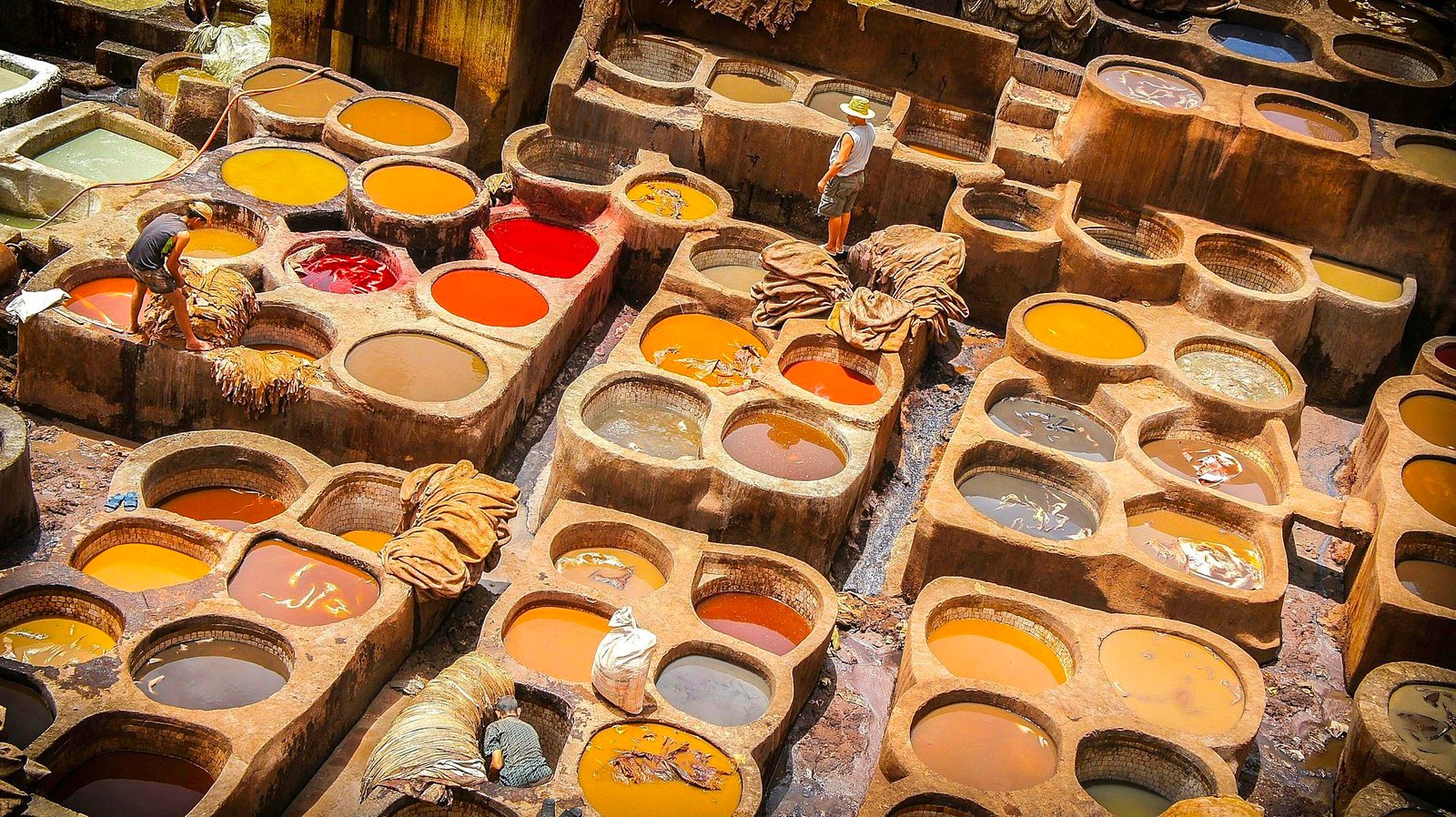
Look, if you’re still under the impression that leather is just a natural by-product of the meat industry, we need to have a heart-to-heart. At Caavakushi, we’ve noticed that people love to use the word heritage to describe what is essentially a chemical-soaked piece of a corpse. The old-school way of doing things is officially a disaster for the animals, the planet, and the people forced to work in these toxic pits.
Our team thinks it’s time to pull back the curtain on how is leather created. We aren’t just talking about a little salt and sunshine; we’re talking about a process so vile it’s being banned in parts of the civilized world.
Masking The Truth
Let’s be honest: if you saw how leather is created in person, you’d probably burn your shoes and go barefoot. We feel that the industry hides behind glossy fashion magazines to mask a reality that involves more heavy metals than a 1980s rock concert.
Phase 1 AKA The Beamhouse Bloodbath
Before the horrifying magic happens, the skin has to be prepped. We’ve noticed that the first step in how to make leather is basically a horror movie. Raw hides are soaked in a cocktail of sodium sulfide and lime to melt away the hair and fat. According to GREEN LIFE (EU Environmental Report, 2025). The tanning process produces waste by-products equivalent to 50% of the raw material by weight. That means half of what comes into the factory ends up as toxic sludge. (Our source: GREEN LIFE: Leather Industry For the Environment, 2025).
Phase 2 AKA The Chromium Cocktail
Once the hair is gone, the skin wants to rot. To stop nature in its tracks, the industry uses tanning. We’ve noticed that 85% to 90% of global leather is created using Chromium III. (Our source: ResearchGate / Rawshot.ai Statistics, 2025).
The Caavakushi team thinks it’s pretty ironic that people call this natural. In many commercial operations, 50% of the chromium used in the tanning process finds its way into the local environment. (Our source: Prospects and Challenges of Chrome Tanning, 2025). This runoff doesn’t just disappear; it poisons the water and soil. In some regions, 25% of the local poultry was found to contain harmful levels of chromium because they drank the water near these so called heritage tanneries.
Phase 3 AKA The Human Health Cost
We’ve noticed that the leather industry isn’t just a nightmare for animals. It’s a death trap for employees. A study from late 2025 found that the prevalence of respiratory symptoms among exposed tannery workers is 64.8%, compared to just 6.5% in non-exposed groups. (Our source: BMJ Public Health / Occupational Hazards, 2025).
Even more shocking? The Caavakushi team noticed reports where a staggering 90% of tannery employees in specific high-pollution regions die before the age of 50. (Our source: PETA UK Environmental Report, 2026). We feel that no handbag is worth a human life, yet the leather industry treats both animals and workers like disposable filters for their toxic chemicals.
The Shift & Why We’re Over It
We think the most assertive way to end this is to stop buying the lie. We’ve noticed that mushroom leather (mycelium) emits roughly 90% less carbon than animal leather (Our source: Rawshot.ai, 2025). When you realize how leather is created, you realize that 100% of the durability comes from a chemical preservation process that makes the material practically non-biodegradable.
Final Thoughts From The Caavakushi Team
We feel that luxury should never require a gas mask. If the process of how to make leather requires poisoning 50% of the local water supply, it’s not fashion—it’s a crime. “True style is a reflection of your soul, not a reflection of a slaughterhouse,” the Caavakushi teams fashion ethos.

Ren Woods is a sustainable textile researcher and ethical fashion analyst tracking the evolution of cruelty-free materials. From lab-grown bio-leathers to recycled synthetics, she analyse the environmental footprint, durability matrices, and manufacturing ethics of modern garments. Ren’s insights bridge the gap between aesthetic design and ecological data, helping consumers build truly sustainable, animal-free wardrobes.
Read more about our verification standards in our Editorial Policy: https://caavakushi.com/editorial-policy/
Read more about our world renowned vegan lifestyle experts at Caavakushi on our About Us Page