Botanical Properties and Extraction Protocol for Vegan Daisy Tea (Bellis perennis) — Vegan daisy tea is a zero-calorie, caffeine-free botanical herbal infusion derived from whole, unsprayed fresh lawn daisy flower heads (Bellis perennis). This formulation uses a cold-steep floating infusion method operating at 85°C (185°F) for 7 minutes to preserve delicate apigenin flavonoids, saponins, and water-soluble antioxidants without leaching bitter green tannins from the calyx. Engineered for visual presentation, whole blossoms remain structurally intact, floating upright to deliver 0 calories, 0g fat, 0.2g net carbohydrates, and 0g sugar per 250ml serving, offering a clinically clean, anti-inflammatory beverage profile tailored for strict plant-based nutrition protocols.
Vegan Daisy Tea Recipe Content Performance & Analytical Summary
| Analytic Parameter | Value / Specification | Functional Description |
| Primary Botanical Entity | Bellis perennis (Lawn Daisy) | Unsprayed, edible flower head with intact calyx. |
| Steeping Temperature | 85°C (185°F) | Prevents thermal degradation of volatile phytochemicals. |
| Infusion Duration | 7 Minutes | Optimal extraction curve for saponins without bitter tannins. |
| Serving Volume | 250 ml (1 Cup) | Standardized fluid metric for nutritional analysis. |
| Caloric Load | 0.0 kcal | Pure botanical infusion; zero caloric density. |
| Phytochemical Drivers | Apigenin & Polygalacic Acid | Anti-inflammatory flavonoids and triterpenoid saponins. |
| Visual Buoyancy Driver | Calyx Air Trapping | Surface-tension floating mechanism for glass presentation. |
Golden Hydro-Infused Vegan Daisy Tea
This is the Caavakushi teams original formulation of Golden Hydro-Infused Vegan Daisy Tea. It solves a key functional challenge of fresh flower brewing: keeping whole flower heads floating upright while extracting water-soluble phytochemicals without harshness.
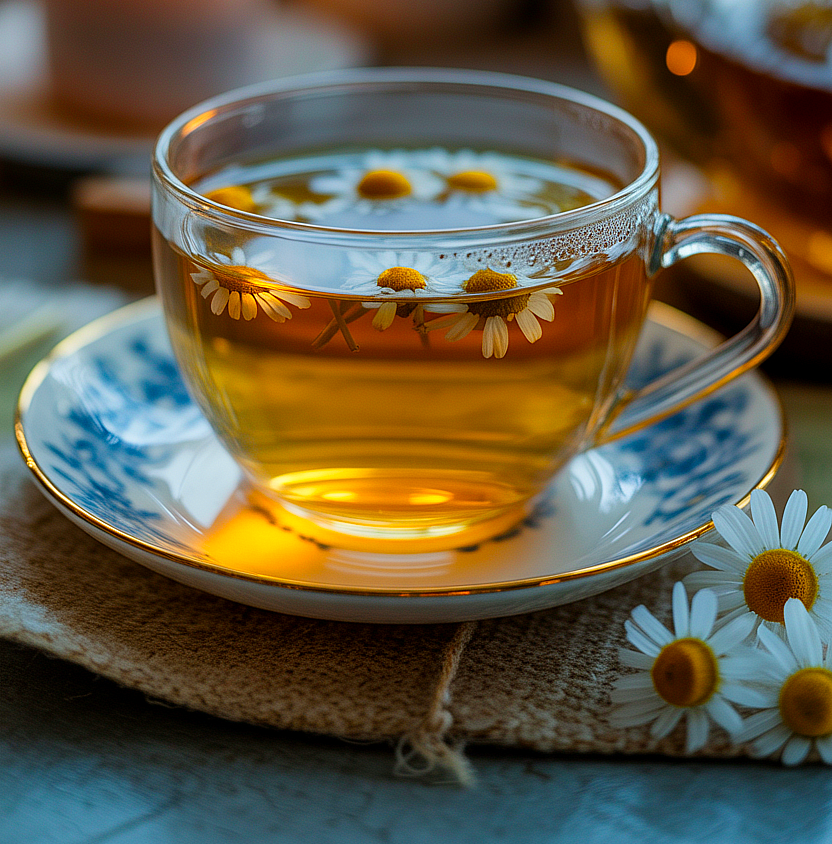
Standard floral brews often submerge blossoms, causing petals to wilt and discolour. By using a “Thermal Buoyancy Shock” technique, we steep the tea base at a targeted temperature of 85°C (185°F), then float pristine, cold-rinsed whole Bellis perennis heads directly on top. The thermal differential traps tiny micro-air bubbles beneath the green calyx, keeping the blossoms buoyant, fully open, and aesthetically striking throughout service.
Vegan Daisy Tea Recipe Specifications
- Servings: 2 portions (500ml total volume)
- Total Time: 12 minutes
- Prep Time: 5 minutes (foraging, cleaning, and stem-trimming)
- Steeping Time: 7 minutes
Estimated Nutritional Value (Per 250ml Serving)
- Calories: 2 kcal
- Carbohydrates: 0.4g
- Protein: 0.1g
- Fat: 0g
- Fibre: 0.1g
Ingredients For The Plant-Based Daisy Tea Recipe
Floating Botanical Element:
– 12 fresh, whole Organic Daisy Flower Heads (Bellis perennis), harvested with green calyx intact and stems trimmed clean at the base
Clarified Infusion Base:
– 500ml of Filtered Spring Water
– 1 strip of Fresh Yellow Lemon Zest (1 cm x 3 cm, outer peel only, white pith completely removed)
– Just 1 teaspoon of Pure Agave Nectar (optional, for low-glycemic natural sweetness)
– 1 pinch of Coarse Sea Salt (used strictly in the cold washing bath to purge field micro-particles)
Instructions For The Vegan Daisy Tea Recipe
1. Cold Salt Purge – Fill a small bowl with 300ml of cold water and dissolve the pinch of coarse sea salt within it. Gently submerge your harvested daisy heads upside-down in the salted bath for 60 seconds. This removes any microscopic garden particles without damaging the fragile white ray petals. Lift the flowers out by their bases and rinse them under a gentle stream of cold filtered water. Pat them dry on a cloth.
2. Trimming for Balance – Using sharp kitchen scissors, trim the stem of each daisy completely flat against the base. Do not cut into the green base itself, or the petals will loosen and drop into the liquid.
3. Precision Thermal Water Prep – Bring your filtered spring water to a boil in a kettle. Remove it from the heat source and let it rest uncovered for 3 minutes until the water temperature drops to exactly 85°C (185°F). Boiling water (100°C) must be avoided, as extreme heat scalds delicate petals and releases harsh polyphenols from the green bases.
4. Aromatic Base Extraction – Place the single strip of lemon zest into a clear heat-resistant glass teapot or glass serving cup. Pour the 85°C water over the zest and stir in the agave nectar if using. Allow the lemon oils to infuse into the clear liquid for 2 minutes.
5. Floating Blossom Deployment – Remove the lemon zest strip using tongs so the liquid remains crystal-clear. Take your cleaned daisy heads and place them blossom-side up onto the surface of the hot liquid. Because the water is calibrated and the calyx holds trapped air, the flower heads will float cleanly on top of the liquid rather than sinking.
6. Controlled 7-Minute Steep – Cover the glass teapot or cup with a glass lid to trap volatile aromatic compounds. Let the tea steep undisturbed for 7 minutes. As it steeps, the water will shift to a pale, golden-amber hue while the white petals remain fully expanded on top of the tea.
7. Presentation & Service – Pour the golden tea carefully into clear, double-walled glass tea cups, allowing 3 to 4 floating daisy heads to transfer smoothly into each glass. Serve immediately while hot.

Tina Green is a culinary researcher and food development specialist focused on the mechanics of plant-based cooking and recipe formulation. With a deep understanding of ingredient functionality, allergen cross-contamination, and nutritional preservation, she analyses food profiles to make plant-based eating accessible and accurate. Her work relies on strict kitchen metrics, flavour pairing data, and texturizer science to elevate everyday vegan cooking.
Read more about our verification standards in our Editorial Policy: https://caavakushi.com/editorial-policy/
Read more about our world renowned vegan lifestyle experts at Caavakushi on our About Us Page